In the demanding world of industrial piping, ensuring the longevity and structural integrity of connection points is paramount. The use of high-quality galvanized fittings provides a critical defense mechanism against oxidation and environmental decay, particularly in settings where moisture and chemical exposure are constant. By applying a protective zinc coating to malleable cast iron, these components maintain a seamless flow and secure seal under rigorous pressure conditions.
The global shift toward sustainable infrastructure has placed a renewed emphasis on materials that reduce the need for frequent replacement. Understanding the technical specifications of these components—from their tensile strength to their coating thickness—allows engineers to optimize pipeline efficiency and safety. Whether used in water distribution or industrial gas lines, the right choice of fittings can prevent catastrophic leaks and significantly lower maintenance overhead.
For procurement managers and site engineers, sourcing certified galvanized fittings ensures compliance with international standards like ISO49 and EN 10242. By integrating these robust components into a system, industries can achieve a balance between cost-effectiveness and high-performance reliability, ensuring that every joint in the pipeline is a point of strength rather than a potential failure.
The Technical Composition of Galvanized Fittings
The core of these components lies in the synergy between malleable cast iron and a hot-dip zinc coating. Malleable iron, specifically BS EN 1562 (EN-GJMB-350-10), offers the necessary ductility to withstand mechanical stresses without cracking. When this base material is galvanized, it creates a metallurgical bond that prevents the iron from reacting with oxygen and water, effectively stopping rust before it begins.
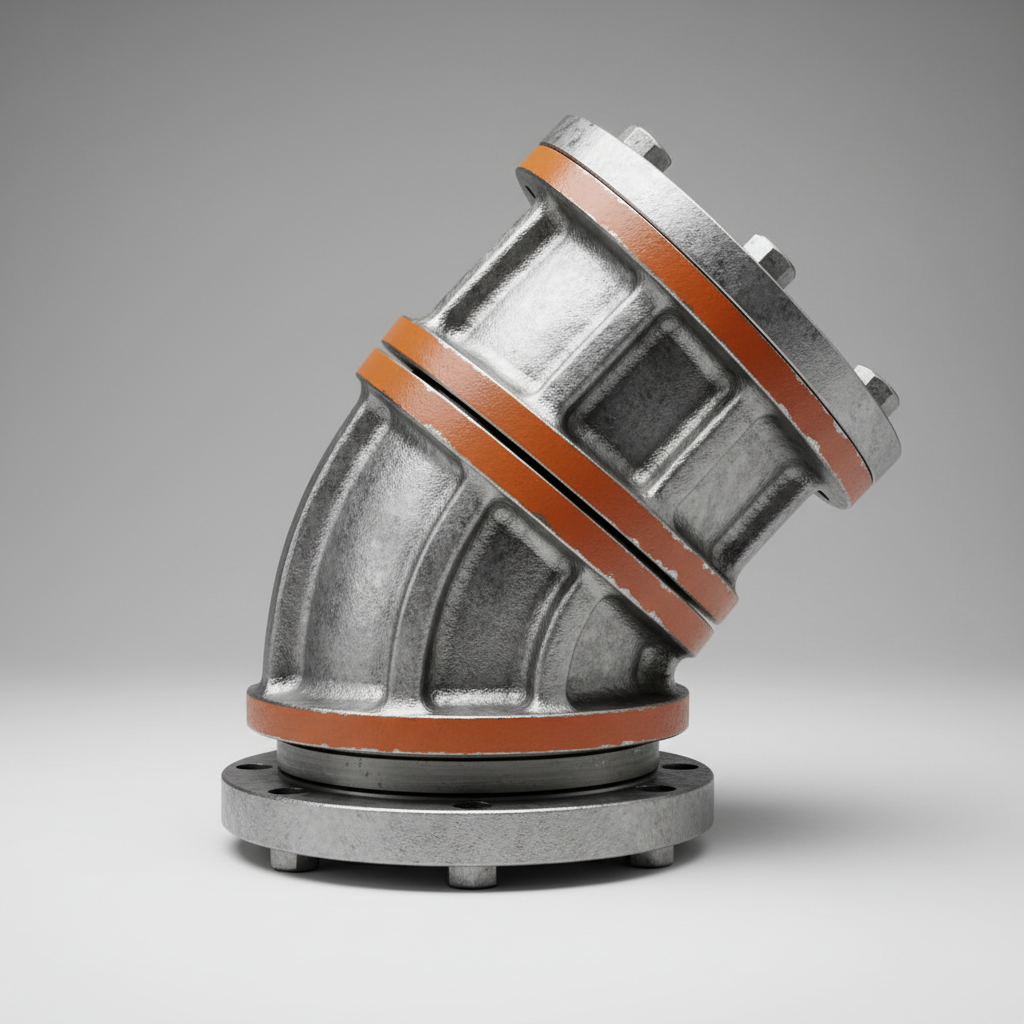
In the case of 90° reducing elbows, the composition is designed to manage directional fluid changes while transitioning between different pipe sizes. With a minimum tensile strength of 300 MPA and a zinc coating averaging 70 um, these parts are engineered to maintain a high-pressure seal (up to 25 bar) even in aggressive environments, ensuring the pipeline remains leak-proof over decades of service.
Global Industry Standards and Certification
To ensure safety across international borders, galvanized fittings must adhere to strict manufacturing protocols. Standards such as ISO49 and EN 10242 define the dimensional tolerances and material properties required for malleable iron pipe fittings. These standards ensure that a fitting produced in one region will fit perfectly with a pipe produced in another, facilitating global trade and infrastructure development.
Certification from bodies like UL (Underwriters Laboratories) and FM (Factory Mutual) adds a layer of critical trust. These approvals signify that the product has undergone rigorous testing for pressure resistance and fire safety, making them suitable for high-risk industrial installations. For an engineer, these certificates are not just paperwork; they are a guarantee that the system will perform under extreme stress.
Furthermore, the use of BSPT and NPT threading options allows these fittings to integrate into diverse piping ecosystems worldwide. By combining these threading standards with a verified hot-dip galvanized finish, manufacturers can provide a universal solution that meets the safety and quality demands of both the North American and European markets.
Core Performance Factors of Malleable Iron
The durability of galvanized fittings depends heavily on the material's elongation and tensile properties. A minimum elongation of 6% ensures that the iron can absorb slight shocks or vibrations from the pump or surrounding machinery without fracturing, which is a common failure point in standard grey cast iron.
Another critical factor is the precision of the beaded end design. This feature, combined with high-quality galvanized fittings, ensures a tighter threaded connection, reducing the reliance on excessive sealant and decreasing the likelihood of seepages at the joints in high-pressure systems.
Finally, the working pressure range of 20 to 25 bar (≤PN25) marks these components as heavy-duty. This capacity allows them to be used in complex industrial loops where pressure fluctuations are common, ensuring that the structural integrity of the pipeline is never compromised during peak operational loads.
Comparative Analysis of Coating Efficiency
The effectiveness of a protective layer is measured not just by its presence, but by its thickness and uniformity. Hot-dip galvanizing is superior to cold-galvanizing because it creates a bond that is integrated into the metal substrate. For industrial-grade components, maintaining a minimum zinc coating of 63 um per fitting is essential to prevent localized corrosion in "dead zones" of the pipe.
When comparing different surface treatments, the hot-dip process offers a significantly longer lifecycle than black iron finishes, which require secondary painting or coating. This intrinsic protection reduces the total cost of ownership by eliminating the need for frequent re-coating and inspections in humid or coastal environments.
Performance Rating of Galvanized Fittings Surface Treatments
Global Applications in Industrial Piping
In remote industrial zones, such as mining sites or oil refineries, the environment is often caustic. The use of galvanized fittings in these regions is a necessity rather than a preference. These components are used to build the intricate networks of pipes that transport water, air, and non-corrosive fluids across vast distances where maintenance access is limited.
Beyond heavy industry, these fittings are crucial in urban infrastructure for fire protection systems and HVAC piping. Their ability to resist corrosion while maintaining a high pressure rating makes them the ideal choice for sprinkler systems in commercial skyscrapers, where reliability is a matter of life and safety.
Long-term Value and Sustainability
From a financial perspective, investing in high-spec galvanized fittings reduces the "life-cycle cost" of a piping project. While the initial purchase price may be higher than untreated iron, the elimination of corrosion-related failures and the reduction in replacement frequency lead to significant savings over a 10 to 20-year period.
Sustainability is also improved through the longevity of the material. By extending the time between replacements, industries reduce the amount of scrap metal and the energy required to manufacture new components. This aligns with global green building initiatives and ISO environmental management standards.
Ultimately, the value lies in the peace of mind provided by a system that is guaranteed for years. When a manufacturer provides a minimum 1-year guarantee backed by 30 years of casting experience, it creates a chain of trust that ensures the end-user's operation remains uninterrupted.
Technical Specifications and Sizing Guide
Selecting the correct size for a reducing elbow is critical for maintaining optimal fluid velocity and preventing pressure drops. For example, transitioning from a 2-inch pipe to a 1.5-inch pipe requires a fitting that can handle the change in flow dynamics without creating excessive turbulence.
The weight of the fitting is often an indicator of its quality and wall thickness. A heavier fitting generally suggests a more robust casting process, which translates to better performance under the 20-25 bar pressure limits. Precision engineering ensures that the reducing diameter is consistent, allowing for a perfect seal.
The following table provides a detailed breakdown of available sizes for the 90° reducing elbow, helping engineers select the precise component for their pipeline architecture.
Technical Dimensions and Weight Analysis of Reducing Elbows
|
Item Code
|
Size (Inch)
|
Weight (KG)
|
Pressure Rating
|
| ERL0705 |
3/4 X 1/2 |
0.116 |
≤PN25 |
| ERL1005 |
1 X 1/2 |
0.153 |
≤PN25 |
| ERL1007 |
1 X 3/4 |
0.175 |
≤PN25 |
| ERL1207 |
1-1/4 X 3/4 |
0.228 |
≤PN25 |
| ERL1210 |
1-1/4 X 1 |
0.273 |
≤PN25 |
| ERL2015 |
2 X 1-1/2 |
0.651 |
≤PN25 |
FAQS
The primary advantage is corrosion resistance. Hot-dip galvanizing creates a metallurgical bond with the base metal, providing a thick, durable zinc layer that prevents rust. Black iron fittings are prone to rapid oxidation in humid environments, whereas galvanized fittings are designed for long-term outdoor or industrial use without needing secondary protective coatings.
Yes, these fittings are engineered for working pressures between 20 and 25 bar (≤PN25). With a minimum tensile strength of 300 MPA and a malleable cast iron base (BS EN 1562), they can reliably handle the stresses of industrial piping systems, provided the system operates within these specified limits.
You should look for UL Listed and FM Approved certifications, as these ensure the products meet strict safety and quality standards for fire protection and industrial use. Additionally, compliance with ISO49 or EN 10242 ensures the dimensional accuracy and material quality required for global piping standards.
Yes, the product line supports both BSPT and NPT threading options. This versatility allows the fittings to be used in different regional piping standards, making them compatible with most international plumbing and industrial piping systems.
A reducing elbow performs two functions: it changes the direction of the fluid flow by 90 degrees and connects two pipes of different sizes. This is essential for optimizing flow velocity and managing pressure drops within a complex piping network.
While the exact lifespan depends on the environment, the hot-dip zinc coating (average 70 um) is designed to protect the iron for many years. With proper installation and a suitable environment, these fittings can last decades, significantly outperforming untreated cast iron.
Conclusion
In summary, the integration of galvanized fittings into industrial piping is a strategic decision that balances immediate performance with long-term durability. By combining the strength of malleable cast iron with the protective properties of hot-dip galvanization, these components ensure system stability, resist environmental degradation, and comply with the most rigorous global standards like UL and FM.
As industrial demands evolve toward higher safety and lower maintenance, the importance of sourcing precision-engineered fittings cannot be overstated. We recommend that engineers and procurement officers prioritize certified materials and verified coating thicknesses to ensure the longevity of their infrastructure. For high-quality, durable solutions, visit our website: www.pannextfittings.com.