To be honest, things have been a bit crazy lately. Everyone’s talking about prefabrication, modular construction... seems like everyone wants things faster, cheaper, you know? But it’s never that simple, is it? I’ve been seeing a lot of designs that look good on paper, but fall apart when you actually try to build them. It’s like they forgot the human element – the guy actually holding the wrench, the mud, the rain… all that real-world stuff. It’s a constant battle, making sure things are practical.
The biggest issue I’ve been running into is with connections. Specifically, finding a reliable fitting for connecting 2 pipes in same direction. Sounds simple, right? But it's a headache. You want something that can handle the pressure, the vibrations, the occasional accidental whack with a hammer… and doesn't leak. I swear, I spent a week last month just chasing down leaks on a project in Shanghai.
We used to rely heavily on welded joints, but those are time-consuming and require a certified welder, which is getting harder and harder to find. And honestly, the quality control can be… questionable. So now there's this push for mechanical fittings, compression fittings, even these quick-connect types. Each has its own problems, of course.
The Current Landscape of Pipe Connection Fittings
Have you noticed how everything's becoming more specialized? It's not just about a fitting for connecting 2 pipes in same direction anymore. It’s about what kind of pipe, what fluid is going through it, what temperature, what pressure… it’s endless. There’s stainless steel, carbon steel, PVC, CPVC, PEX… each with its own strengths and weaknesses. And each requiring a different type of fitting. It's a lot to keep track of, believe me.
We're seeing a huge demand for push-to-connect fittings, especially in residential plumbing. They’re quick and easy, even a homeowner can install them. But strangely, I’m still getting pushback from some older plumbers who just don’t trust them. They grew up with threaded connections and they're comfortable with those. Changing habits is hard.
Common Design Pitfalls in Fittings
I encountered this at a factory in Ningbo last time. They were designing a fitting with too many sharp angles. Look, fluid dynamics 101: sharp angles create turbulence, turbulence creates pressure drop, pressure drop creates problems. It seems obvious, right? But it happens all the time. Engineers get caught up in making things look sleek and forget about how the fluid actually flows through it. Another common mistake is underestimating the thermal expansion and contraction of the pipes. If you don't account for that, the fitting will eventually fail.
And don't even get me started on corrosion. Choosing the wrong material for the environment is a recipe for disaster. I once saw a whole system corrode within six months because they used the wrong grade of stainless steel in a saltwater environment. A costly mistake, let me tell you.
Ultimately, it’s about thinking through the entire system, not just the individual fitting.
Materials We Actually Use
Stainless steel is king for corrosion resistance, no question. But it’s expensive and can be a pain to machine. I love the feel of a well-machined stainless steel fitting – heavy, solid. It just feels right. But sometimes you need something lighter and cheaper, like brass. Brass is good for potable water applications, but it can leach lead, so you have to be careful.
PVC and CPVC are workhorses, especially for drainage and irrigation. They're lightweight, easy to install, and relatively inexpensive. But they get brittle in cold weather, so you can't use them in freezing climates. And the smell when you cut PVC? Ugh. It just gets in your nostrils and stays there. Then there’s PEX, the flexible plastic tubing. It's gaining popularity for water distribution, but I still worry about long-term durability. It just doesn’t feel as robust as metal.
I’m starting to see more and more composite materials too – plastics reinforced with fibers. They offer a good balance of strength, weight, and cost. But you need to be careful about UV exposure. Some composites degrade quickly in sunlight.
Real-World Testing: Beyond the Lab
Laboratory tests are important, sure, but they don't tell the whole story. You need to see how these fittings perform in the real world. We put them through pressure cycling tests – repeatedly pressurizing and depressurizing them to simulate real-life fluctuations. We expose them to different temperatures, different chemicals, different levels of vibration.
But the best test is just to install them and let them sit for a year. That’s when you really find out what works and what doesn’t. I once saw a fitting that passed all the lab tests fail miserably after six months in a wastewater treatment plant. Turns out, the chemicals in the wastewater were slowly corroding the material. Anyway, I think that’s a good reminder that lab results aren’t always predictive of real-world performance.
How Users Really Use Fittings
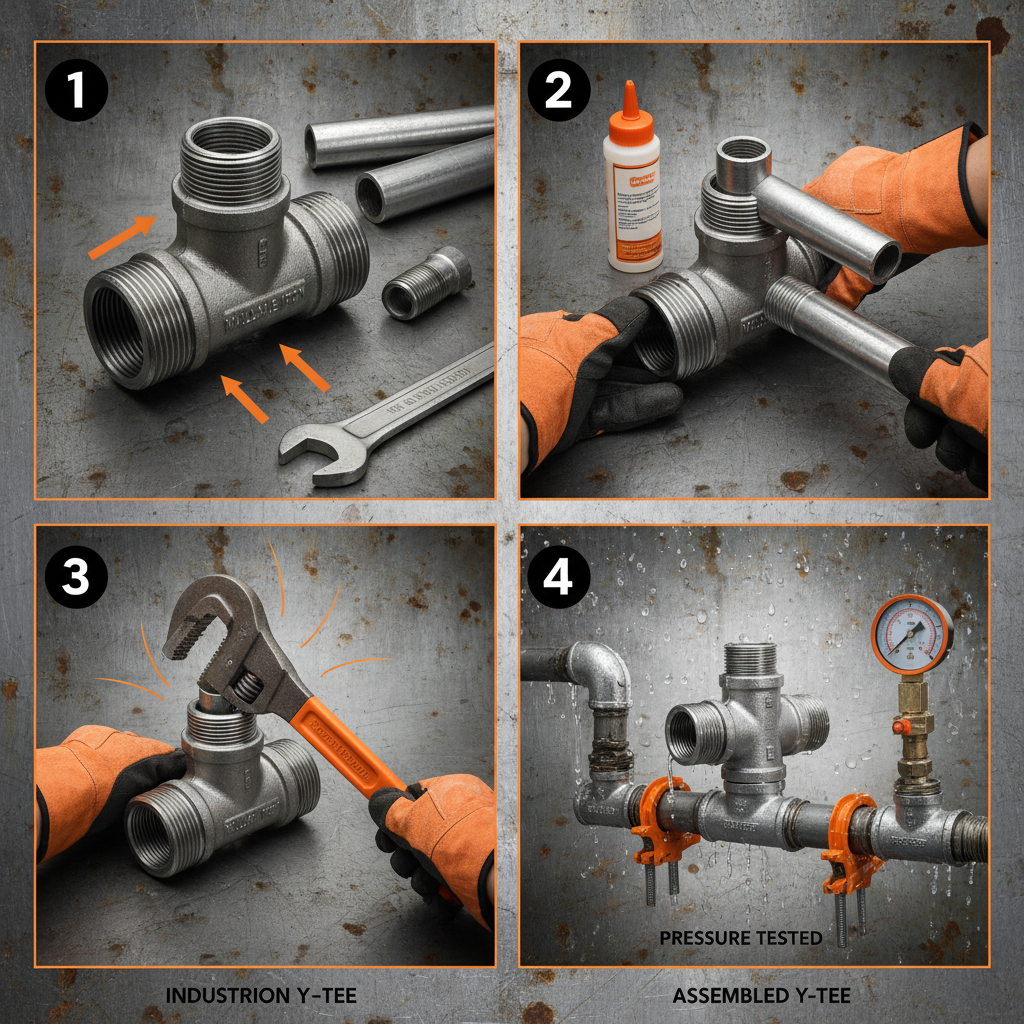
You know, you design something with a specific installation procedure in mind, but then you go on-site and see people doing things completely differently. I saw a guy using a pipe wrench to tighten a compression fitting the other day. A pipe wrench! He stripped the nut right off.
It's the same with Teflon tape. Some people use way too much, some use way too little. And don’t even get me started on the guys who just eyeball everything and don't use a torque wrench. They're relying on feel. And sometimes, that's enough. But more often than not, it leads to leaks.
Advantages and, Let’s Be Honest, Disadvantages
A good fitting for connecting 2 pipes in same direction is fast to install, reliable, and relatively inexpensive. That's the sweet spot. But finding one that ticks all those boxes is tough. Compression fittings are great for quick repairs, but they can be prone to leaks if not installed properly. Welded joints are strong, but they're time-consuming and require skilled labor. Push-to-connect fittings are easy, but they’re generally more expensive.
And then there's the whole issue of compatibility. You can't just mix and match different types of fittings and pipes. You have to make sure they're compatible materials and sizes. It seems obvious, but… you’d be surprised.
The biggest disadvantage, across the board, is the potential for human error. A bad installation can negate all the benefits of a good fitting. That's why training and proper supervision are so important.
Customization and a Story From Shenzhen
We do get requests for custom fittings, surprisingly often. Usually, it’s for specialized applications – something with a weird angle, or a specific port size. Last month, that small boss in Shenzhen who makes smart home devices insisted on changing the interface to , and the result was a whole batch of fittings that didn't fit anything! He wanted to be "innovative," but it just created a logistical nightmare.
Sometimes it’s just a matter of a different finish – say, a black anodized finish instead of the standard silver. Other times, it’s more complex, like a fitting with integrated sensors. We did one project where they wanted fittings with built-in flow meters to monitor water usage. That was a fun challenge.
But the key is to keep it simple. The more complex the fitting, the more likely it is to fail. And the more expensive it is to manufacture.
Summary of Fitting Performance Parameters
| Fitting Type |
Installation Difficulty (1-10) |
Leakage Risk (1-10) |
Cost (Relative) |
| Compression Fitting |
3 |
6 |
Medium |
| Welded Joint |
8 |
2 |
High |
| Push-to-Connect |
1 |
5 |
High |
| Threaded Connection |
5 |
4 |
Low |
| Flanged Joint |
6 |
3 |
Medium |
| Grooved Coupling |
4 |
4 |
Medium |
FAQS
For high-pressure stuff, you really want to look at welded joints or properly sized and installed flanged connections. They’re the most reliable. Compression fittings can work, but you need to make absolutely sure you’re using the correct size and material, and that the tubing is properly prepared. Don't skimp on the torque either! A loose connection at high pressure is a recipe for disaster. Honestly, when in doubt, consult an engineer.
It depends. You need to consider galvanic corrosion. If you connect dissimilar metals in the presence of an electrolyte (like water), you can end up with corrosion at the junction. For example, you generally shouldn't connect copper directly to steel. You can use a dielectric union to prevent that. Always check compatibility charts before mixing materials.
Most leaks come down to improper installation. Not enough torque, damaged tubing, incorrect ferrule size… these are the usual suspects. Also, make sure the tubing is clean and free of burrs before inserting it into the fitting. A little bit of pipe dope can help seal things up, but don't overdo it. And for heaven's sake, don't reuse a compression fitting!
Very important! The ferrule creates the seal, so it needs to be compatible with both the tubing material and the fluid being carried. Copper ferrules are common for copper tubing, but you can also get stainless steel and plastic ferrules. Using the wrong ferrule material can lead to corrosion and leaks. Read the fitting manufacturer’s instructions!
They’ve come a long way, but I still have reservations about long-term reliability. They’re great for quick fixes and temporary installations, but for critical applications, I prefer a more traditional connection method. The plastic components can degrade over time, especially if they’re exposed to UV light or extreme temperatures. Plus, they’re more susceptible to damage from impacts.
Visually inspect for cracks, corrosion, and loose connections. Use a torque wrench to verify that all fittings are tightened to the proper specification. For critical applications, consider performing a leak test using air or water. And remember to document everything! Keep records of inspections and maintenance. Trust me, it’ll save you headaches down the road.
Conclusion
Ultimately, there's no single "best" fitting for connecting 2 pipes in same direction. It all depends on the application, the materials, and the skill of the installer. We’ve talked about materials, testing, real-world usage, and even a few pitfalls. But the most important thing to remember is that a reliable connection is critical for the safety and efficiency of any piping system.
The industry's moving towards faster, easier installations, but that shouldn't come at the expense of quality. Focus on proper training, careful material selection, and rigorous testing. And at the end of the day, whether this thing works or not, the worker will know the moment he tightens the screw. Visit our website at Pannex Fittings to learn more.