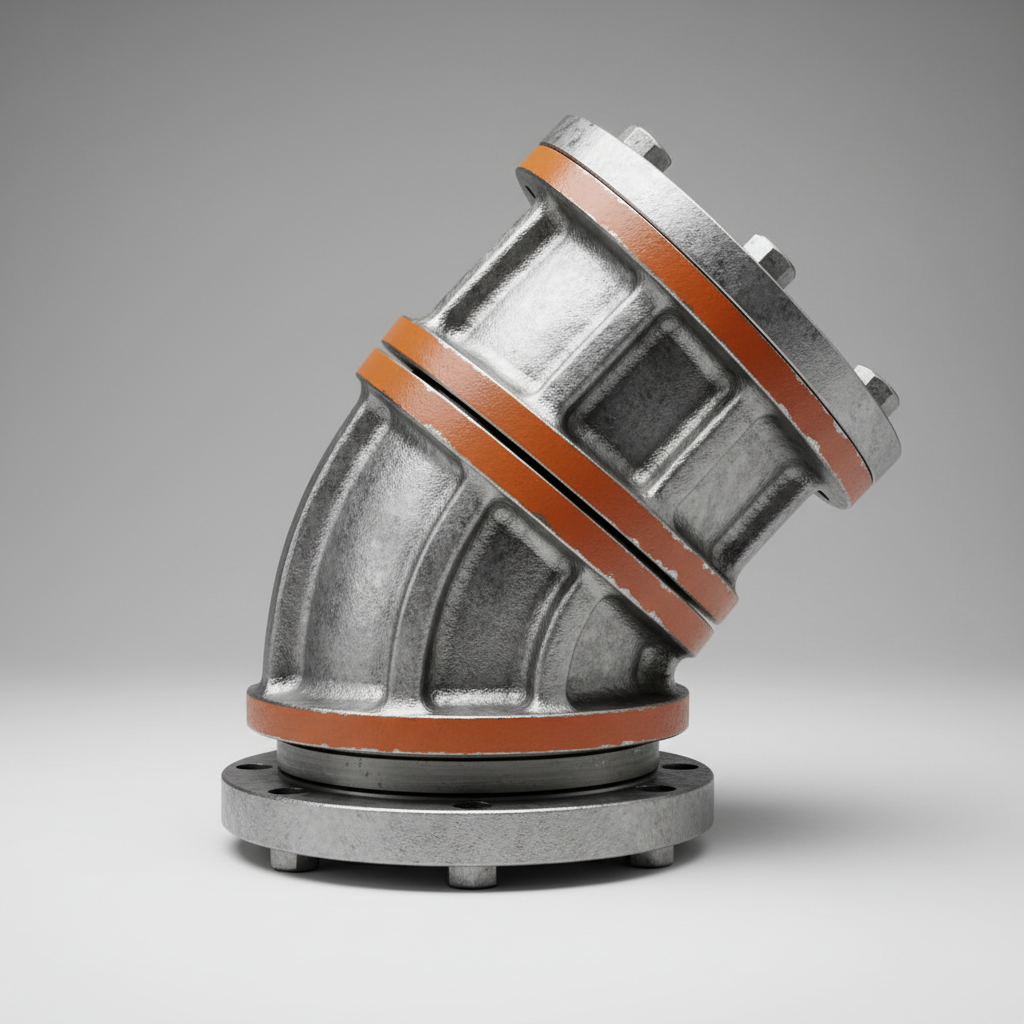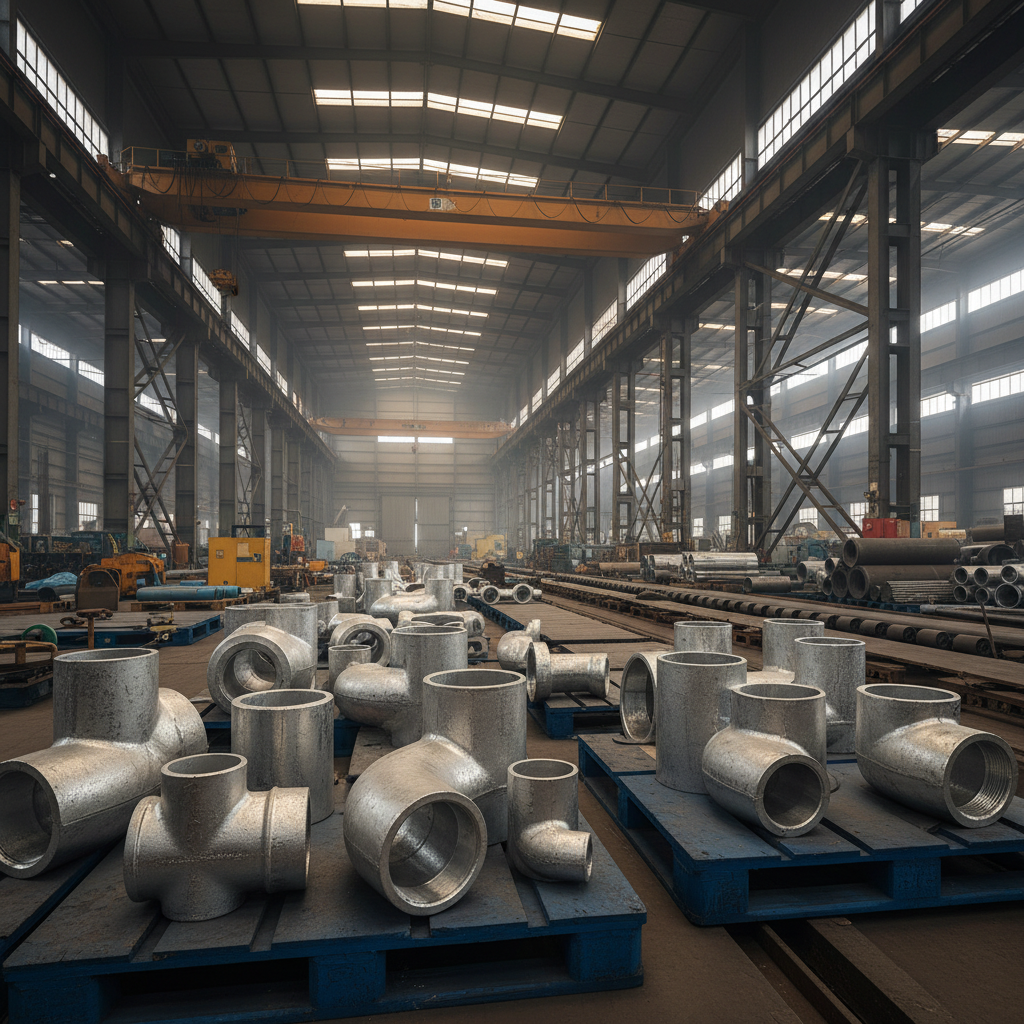

For engineers and procurement officers in the industrial sector, sourcing components from a reliable malleable iron pipe fittings factory is critical for maintaining the structural integrity of fluid transport systems. These components are essential for redirecting flow and creating secure junctions in high-pressure environments. This guide examines the technical requirements and manufacturing standards that define high-quality casting production for global piping networks.
The selection of malleable iron over standard cast iron is driven by the need for greater ductility and impact resistance. In B2B procurement, the focus shifts from simple cost-per-unit to total lifecycle value, emphasizing certifications like UL and FM to mitigate operational risks. Understanding the relationship between material composition, such as BS EN 1562, and real-world application is the first step toward optimizing piping system reliability.
Readers will explore the intricacies of automated production lines, the importance of specific surface coatings for longevity, and the logistics of international sourcing. By analyzing the performance factors of equal tees and other branch components, this article provides a framework for evaluating suppliers based on their technical capacity, testing rigor, and adherence to international standards like ISO 49/EN 10242.
The Role of Malleable Iron in Piping Infrastructure
Malleable iron is produced through the annealing of white cast iron, a process that transforms the brittle cementite into tempered carbon (graphite), thereby improving the material's ability to withstand deformation without fracturing. In the context of malleable iron pipe fittings factory operations, this heat treatment is the pivotal stage that ensures the final product can handle the stresses of industrial installation and thermal expansion. Unlike gray iron, malleable components offer superior tensile strength and a higher elongation rate, making them ideal for water, gas, and oil distribution where safety is non-negotiable.
Evaluating Industrial Casting Production
Evaluating a casting facility requires a deep dive into their technical infrastructure and quality assurance protocols. A professional production environment integrates advanced automation with rigorous third-party validation to ensure consistency across millions of units. The following dimensions outline the critical factors that influence the quality and reliability of malleable iron components.
Certification and Compliance Standards
Certifications are not mere badges but evidence of a factory's ability to meet stringent safety and performance benchmarks. UL (Underwriters Laboratories) and FM (Factory Mutual) approvals indicate that the products have passed rigorous fire and pressure testing, which is often a prerequisite for insurance compliance in North American and European markets. ISO 9001 certification further validates that the management system ensures consistent quality output.
| Certification | Focus Area | Buyer Benefit | Risk Mitigated |
|---|---|---|---|
| UL Listed | Safety & Performance | Insurance Compliance | System Failure |
| FM Approved | Loss Prevention | Industrial Reliability | Property Damage |
| ISO 9001 | Quality Management | Consistent Batch Quality | Production Variance |
| BS EN 10242 | Dimensional Standard | Interchangeability | Installation Mismatch |
| BS EN 1562 | Material Composition | Mechanical Integrity | Brittle Fracture |
| SGS | Third-party Inspection | Verified Specifications | Supplier Misrepresentation |
Manufacturing Precision via DISA Automation
The adoption of DISA automated production lines marks a shift from manual casting to high-precision engineering. Automated molding reduces human error, ensures uniform wall thickness, and significantly increases production capacity. For a high-volume supplier, such as PANNEXT, this technology allows for the production of thousands of tons of fittings annually while maintaining the tight tolerances required for beaded ends and precision threading.
Material Performance and Tensile Strength
Mechanical properties are the backbone of piping safety. Malleable cast iron, specifically grade EN-GJMB-350-10, is engineered for a minimum tensile strength of 300 MPA and a minimum elongation of 6%. These figures ensure that the fitting can absorb energy during pressure surges or seismic events without catastrophic failure, providing a critical safety margin for high-pressure systems operating up to PN25.
Surface Treatment and Corrosion Resistance
Environmental exposure necessitates robust surface protection. Hot-dip galvanizing is the industry standard for preventing oxidation, with an average zinc coating of 70 um ensuring long-term protection in humid or corrosive atmospheres. For less demanding environments, black iron finishes provide a cost-effective base. The quality of the coating directly impacts the lifecycle and maintenance frequency of the installed piping network.
Global Logistics and Distribution Hubs
In B2B procurement, delivery speed is as vital as product quality. Strategic location—such as being within proximity to major international airports and seaports—reduces transit times and logistics costs. Facilities located near the Beijing-Tianjin corridor, for instance, can leverage immediate access to global shipping lanes, ensuring that project schedules are met without delays in the supply chain.
Thread Compatibility and Fitting Geometry
Compatibility issues often arise from mismatched threading standards. High-quality fittings must offer precise BSPT (British Standard Pipe Tapered) or NPT (National Pipe Tapered) threading to ensure leak-proof seals. Furthermore, the geometry of components like the equal tee—where the branch and main outlets are identical in size—must be perfectly symmetrical to maintain balanced flow dynamics within the 90-degree direction.
Procurement Lead Times and Sampling
Reducing procurement risk involves a structured sampling and payment process. Professional suppliers typically provide free samples to verify fit and finish before full-scale production. Standard lead times, often around 35 days, allow for the integration of custom OEM requirements and rigorous final testing, while flexible payment terms like L/C or T/T facilitate secure international trade.
FAQ
What is the primary difference between malleable iron and standard cast iron fittings?
The main difference lies in the annealing process. Malleable iron is heat-treated to remove the brittleness associated with white cast iron, resulting in a material that is more ductile and resistant to impact. This makes it far more suitable for piping systems that may experience vibration or pressure fluctuations, whereas standard gray cast iron is more prone to cracking under similar stress.
Why are UL and FM certifications important for pipe fittings?
These certifications provide independent verification that the products meet strict safety and reliability standards. UL (Underwriters Laboratories) focuses on overall safety, while FM (Factory Mutual) emphasizes loss prevention. In many industrial projects, these certifications are mandatory for insurance approval and to guarantee that the fittings can withstand high-pressure and high-temperature conditions without leaking.
Which surface treatment should I choose for outdoor piping installations?
For outdoor or corrosive environments, hot-dip galvanized coating is highly recommended. This process applies a thick layer of zinc (typically around 70 um) that acts as a sacrificial anode, protecting the underlying iron from rust and oxidation. Black iron is suitable for indoor, dry environments where corrosion risk is minimal and cost reduction is a priority.
Can I request custom OEM specifications for malleable fittings?
Yes, most professional casting facilities, including PANNEXT, accept OEM requests. This can include customized branding, specific thread types (NPT vs BSPT), or unique dimensional requirements. It is advisable to provide detailed technical drawings and request a sample for approval before initiating a full production run to ensure all specifications are met.
What is the expected lifespan and guarantee for these products?
While the operational lifespan of a properly installed galvanized malleable iron system can span several decades, most manufacturers provide a minimum guarantee of 1 year against manufacturing defects. Long-term durability depends heavily on the environment, the quality of the zinc coating, and adherence to the working pressure limits (typically up to PN25).
How does the production capacity of a factory affect delivery times?
Higher production capacity, enabled by technologies like DISA automated lines, allows a factory to handle large orders without compromising lead times. A facility capable of producing over 10,000 tons annually can better absorb demand spikes. Typically, a lead time of 35 days is standard, but high-capacity factories can more reliably meet these deadlines for large-scale B2B contracts.
References and further reading
- ISO 49 / EN 10242: Standards for Malleable Cast Iron Fittings
- BS EN 1562: Specification for Malleable Cast Iron Materials
- UL Standard for Pipe and Tube Fittings - Safety Guidelines
Related Articles