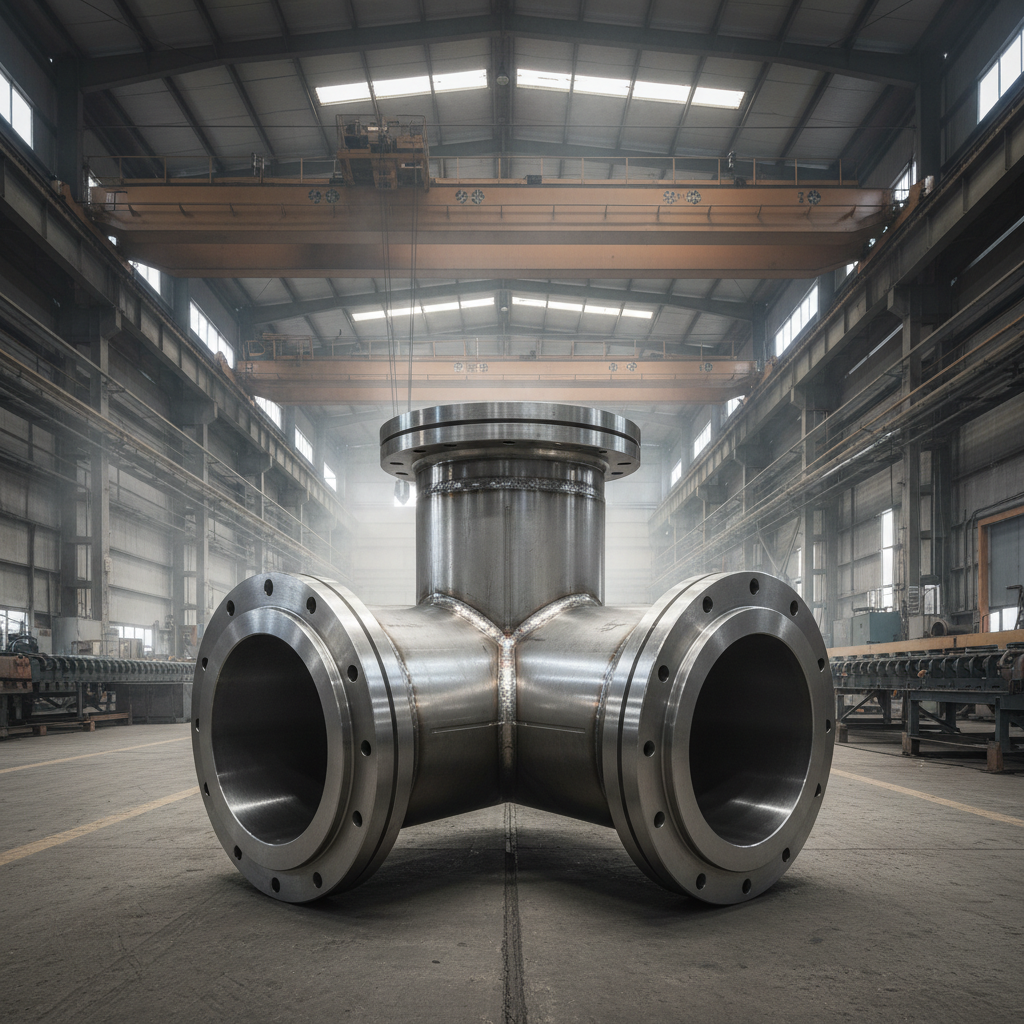
Selecting the right components for fluid transport is critical for ensuring the longevity and safety of any piping system. Across residential and industrial sectors, the variety of available hardware allows engineers to customize flow paths, manage pressure changes, and connect disparate pipe materials efficiently. Understanding the nuances of these components is the first step toward preventing leaks and reducing maintenance costs over time.
The global demand for high-quality piping solutions has surged as urban infrastructure expands and industrial automation becomes the norm. From simple water distribution to complex chemical processing, the reliability of a system depends entirely on the precision of its joints and connectors. Without standardized specifications and material integrity, the risk of catastrophic failure increases, making the selection of certified parts a non-negotiable requirement.
For professionals seeking the best results, exploring different plumbing fittings ensures that each joint is optimized for its specific environment, whether it requires the corrosion resistance of bronze or the heavy-duty strength of malleable iron.
Material Standards and Technical Specifications
The foundation of any reliable piping system lies in the strict adherence to international material standards. For high-performance joints, materials such as ASTM B62 (UNS Alloy C83600) and ASTM B824 C89633 provide the necessary chemical composition to resist degradation. These alloys are specifically chosen for their ability to maintain structural integrity under varying thermal and chemical stresses.
Beyond material composition, dimensional accuracy is governed by standards like ASME B16.15 Class 125. This ensures that threads, conforming to ASME B1.20.1 NPT standards, provide a leak-proof seal across various sizes, from 3/4" to 1-1/2". Such standardization allows for seamless integration of components from different suppliers, reducing installation errors.
The Role of Precision Casting in Pipe Fittings
Precision casting is the core manufacturing process that transforms raw metal into complex geometries capable of handling high-pressure fluids. By controlling the temperature of molten iron and ensuring the purity of the chemical composition, manufacturers can eliminate internal porosities that often lead to premature failure in inferior products.
Following the casting phase, rotary cooling and meticulous appearance inspections are performed to ensure the surface is free of defects. This is followed by grinding and threading processes, where high-precision gages are used to verify that every NPT thread matches the exact specifications required for a secure, airtight connection.
The culmination of this process is a product that combines high tensile strength (minimum 20.0kg/mm) with sufficient elongation (minimum 20%). This balance ensures that the fittings are not too brittle to handle mechanical vibrations but strong enough to withstand the operating pressures of modern water distribution networks.
Applications of Bronze and Alloy Fittings
Bronze fittings are highly prized in the industry for their exceptional corrosion resistance, making them ideal for marine environments and potable water systems. When selecting different plumbing fittings, the choice of C83600 alloy is often driven by the need for a material that does not react with water or oxygen over decades of service.
In industrial jointing for water pipes, these alloys ensure that the flow remains uncontaminated. The use of these specific materials reduces the frequency of replacement cycles, providing long-term economic value to facility managers who must balance initial procurement costs with lifetime maintenance budgets.
Furthermore, the versatility of these different plumbing fittings allows them to be used in both low-pressure residential lines and high-pressure industrial loops. Their ability to be precisely threaded means they can transition between different pipe diameters effortlessly, as seen in the 3/4" x 1/2" x 1/2" configurations.
Performance Metrics for Jointing Water Pipes
Evaluating the performance of a fitting requires a look at its mechanical properties and its ability to maintain a seal. Tensile strength is a primary metric, ensuring the fitting does not deform under the weight of the piping system or the pressure of the fluid. A minimum tensile strength of 20.0kg/mm is the benchmark for industrial-grade reliability.
Another critical factor is the elongation percentage, which indicates the material's ductility. A 20% minimum elongation allows the fitting to absorb slight shocks or thermal expansions without cracking, which is essential in regions with extreme temperature fluctuations.
Performance Comparison of Different Plumbing Fittings
Quality Control and Water Pressure Testing
A rigorous quality management system is the only way to ensure that every single piece of hardware is fit for purpose. This starts with raw material checking to ensure no impurities enter the melt, followed by strict SOPs during the molding and grinding phases to maintain dimensional tolerances.
The most critical stage of quality assurance is the 100% water pressure test. Every fitting must be tested for leakage before it is approved for warehousing. This zero-tolerance approach ensures that when a client installs a fitting, there is absolute certainty that the joint will remain watertight under operational loads.
Global Logistics and Export Packaging Standards
Shipping heavy metal components internationally requires specialized packaging to prevent damage and corrosion during transit. Export standard packaging involves the use of 5-layer corrugated paper master cartons, which provide the necessary cushioning and structural support for bulk shipments of up to 50 tons per month.
To facilitate easier inventory management for the end-user, fittings are organized into inner boxes and bags (e.g., 5 per bag). This systematic approach ensures that quantity counts are accurate and that the products remain clean and protected from humidity until they reach the job site.
Furthermore, the logistics process includes a final QC check to verify that the packed cargoes match the order exactly. This reduces the risk of shipping the wrong size—such as sending a 1" x 3/4" x 1" fitting instead of a 1" x 3/4" x 1/2"—which could otherwise cause significant delays in construction timelines.
Dimensional Analysis of Malleable Fittings
The effectiveness of a plumbing system often depends on the ability to transition between different pipe sizes. For instance, the RT3070505 model (3/4 X 1/2 X 1/2) provides a specific dimension (A: 1.08, B: 1.38, C: 1.38) that allows for precise spatial planning in tight installations.
As the size increases to 1-1/2" models, such as the RT3150515 (1-1/2 X 1/2 X 1-1/2), the dimensions scale accordingly to maintain the pressure rating and structural stability. These measurements are not arbitrary; they are calculated to ensure the fitting fits perfectly within the ASME B16.15 standard.
The following table provides a detailed look at how various size configurations impact the physical dimensions and packaging of these essential components.
Detailed Dimensional and Packaging Specifications
|
Product Model
|
Size (Inches)
|
Dimension A (in)
|
Case Qty
|
| RT3070505 |
3/4 X 1/2 X 1/2 |
1.08 |
100 |
| RT3100505 |
1 X 1/2 X 1/2 |
1.31 |
50 |
| RT3100710 |
1 X 3/4 X 1 |
1.50 |
50 |
| RT3120512 |
1-1/4 X 1/2 X 1-1/4 |
1.69 |
45 |
| RT3121012 |
1-1/4 X 1 X 1-1/4 |
1.69 |
35 |
| RT3150515 |
1-1/2 X 1/2 X 1-1/2 |
1.84 |
30 |
FAQS
Our fittings are manufactured using high-grade alloys conforming to ASTM B62 (UNS Alloy C83600) and ASTM B824 C89633. These materials are specifically selected for their superior corrosion resistance and mechanical strength, ensuring a long service life in various water jointing applications.
We employ a strict quality management system that includes raw material chemical analysis, in-process threading checks with gages, and a mandatory 100% water pressure test for every single piece to ensure there are zero leakages before the product leaves our warehouse.
Yes, all threads are manufactured to be conformant with ASME B1.20.1 NPT standards. This ensures that our fittings are fully compatible with other standard piping components globally, providing a secure and tight seal when installed correctly.
The typical delivery time is 35 days upon receipt of the advanced payment. This window allows for precision casting, meticulous quality testing, and the implementation of export-standard packaging to ensure the goods arrive in perfect condition.
Yes, we provide free samples to our clients. This allows you to verify the material quality, thread precision, and dimensional accuracy of our fittings to ensure they meet your specific project requirements before committing to a bulk order.
We provide a minimum guarantee of 1 year for our products. This reflects our confidence in the casting quality and the rigorous pressure testing every piece undergoes during our production process.
Conclusion
The integrity of any fluid transport system relies on the synergy between high-quality materials and precise engineering. By adhering to ASTM and ASME standards and implementing a 100% pressure-test quality control protocol, manufacturers can provide components that eliminate the risk of leaks and system failures. From the careful selection of bronze alloys to the rigorous testing of NPT threads, every detail contributes to the overall safety and efficiency of the installation.
As infrastructure demands evolve, the shift toward more durable and corrosion-resistant materials will continue to drive innovation in the industry. Investing in certified, high-performance fittings not only reduces immediate installation risks but also secures the long-term viability of the piping network. For those seeking reliable and precision-engineered solutions, we invite you to visit our website: www.pannextfittings.com