

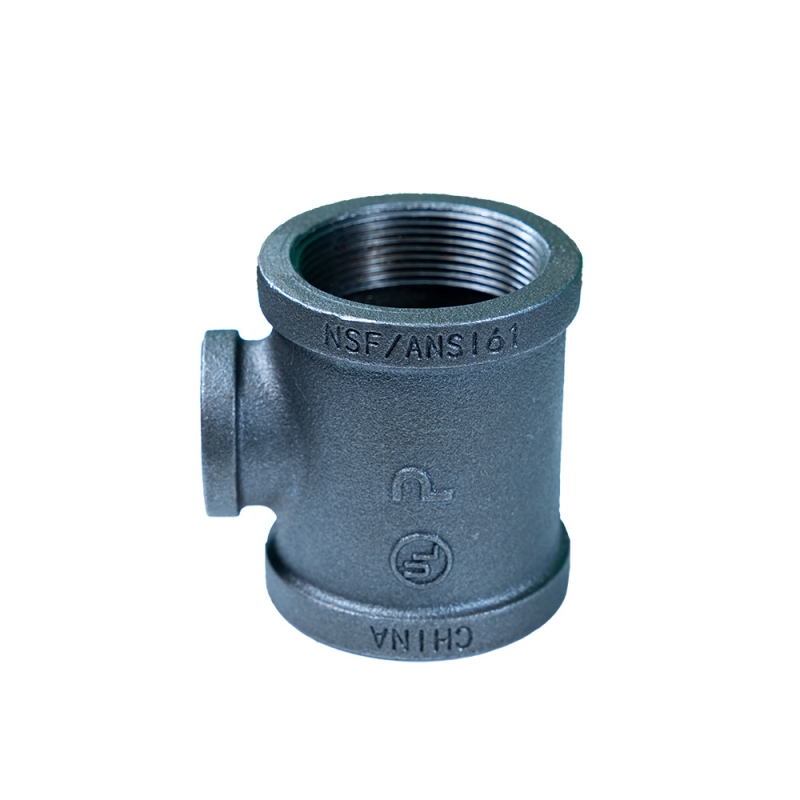
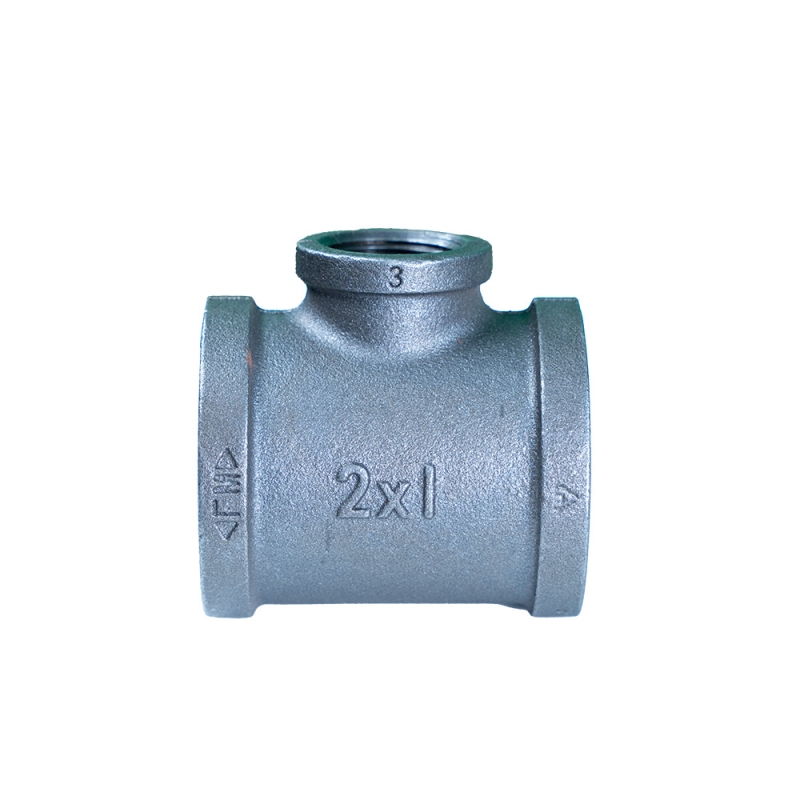
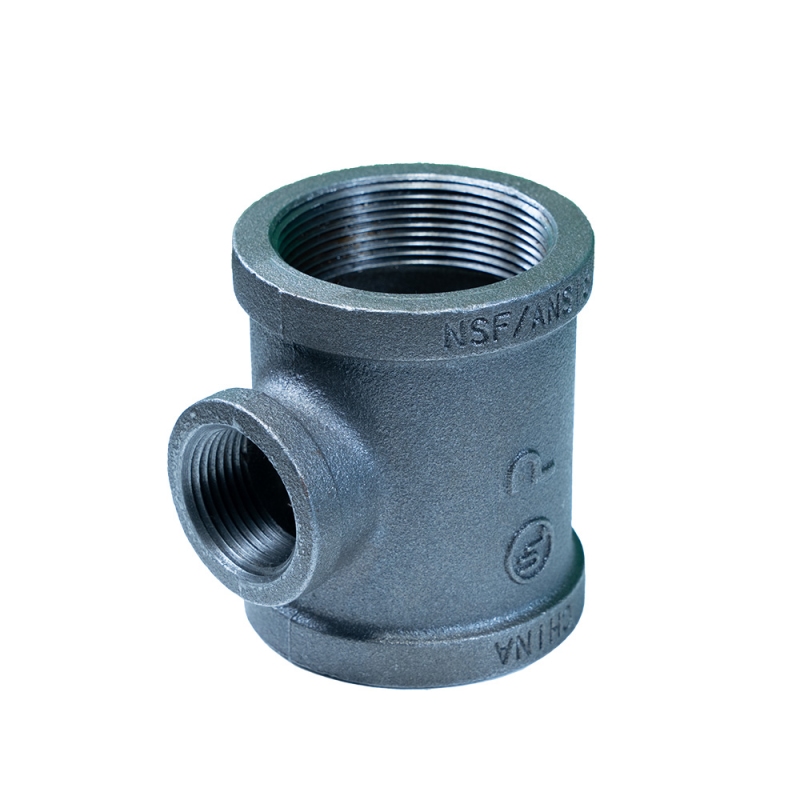
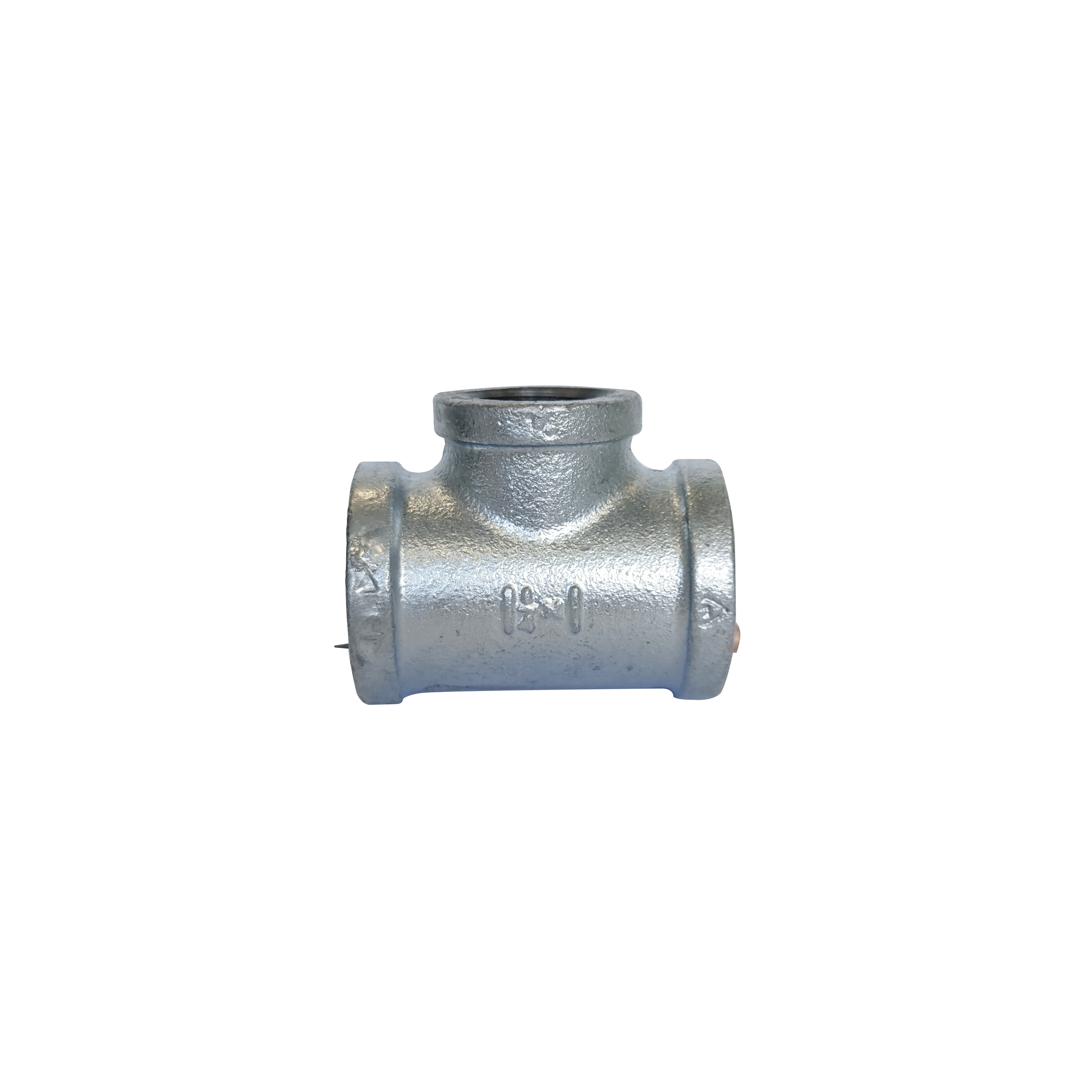
The NPT Malleable Iron Pipe Fitting Reducing Tee is a precision-engineered component designed for high-performance fluid redirection. Primarily utilized at the intersection of main and branch pipelines, this reducing tee allows for an efficient change in flow direction while adjusting the pipe diameter to meet specific system requirements. Manufactured from premium ASTM A197 malleable iron, it ensures structural integrity and long-term reliability in demanding industrial environments.
Engineered for versatility, our reducing tees are available in a comprehensive range of sizes from 1/8" to 3", catering to diverse plumbing, heating, and industrial piping applications. With a robust working pressure rating of 1.6Mpa and available in various surface treatments including black, hot-dipped galvanized, and electro-galvanized finishes, these fittings provide superior corrosion resistance and a leak-proof seal under rigorous operating conditions.
Detailed Parameters
| Material Standard | ASTM A197 Malleable Iron | Threading Standard | NPT / BSP |
|---|---|---|---|
| Working Pressure | 1.6Mpa | Available Sizes | 1/8" - 3" |
| Connection Type | Female Threaded | Surface Finishes | Black, Hot-dipped Galvanized, Electro |
| Product Type | Reducing Tee / Tee Joint | Origin | Hebei, China |
| Supply Capacity | 800 Tons per Month | Shape | Reducing Tee |
Key Advantages
ASTM A197 Quality
Built with industry-standard ASTM A197 malleable iron for exceptional durability and impact resistance.
Corrosion Resistance
Multiple coating options including hot-dipped galvanization to prevent rust and extend service life.
Precision Threading
NPT and BSP standards ensure a tight, leak-free connection and seamless installation process.
Versatile Sizing
Extensive size range from 1/8" up to 3" to support complex piping configurations and reductions.
High Pressure Rating
Stable performance under a working pressure of 1.6Mpa, making it ideal for heavy-duty industrial use.
Global Compatibility
Strict adherence to international standards ensures compatibility with global piping systems.
Product Gallery
Management Platforms
Inventory Control
Real-time tracking of all malleable iron fitting sizes to ensure immediate dispatch.
Quality Assurance
Rigorous ASTM A197 compliance testing and pressure leak detection on every batch.
Order Processing
Streamlined ordering system for bulk industrial requirements and customized shipments.
Logistics Optimization
Strategic shipping routes from Hebei to reduce lead times and freight costs globally.
Packaging Standards
Secure inner and master case packaging to prevent damage during long-haul transit.
Production Scaling
Capacity of 800 tons per month to support large-scale infrastructure projects.
Investment Return Comparison
| Feature | Standard Iron Fittings | Our Malleable Iron Tees |
|---|---|---|
| Durability | Moderate | Extreme (ASTM A197) |
| Corrosion Rate | High without coating | Low (Hot-dipped Galv) |
| Seal Reliability | Standard | High-Precision Leak-proof |
| Installation Cost | Moderate | Low (Fast Threading) |
| Lifecycle Value | Short-to-Medium | Long-term Industrial Grade |
Frequently Asked Questions
Malleable iron is heat-treated to remove internal stresses, making it significantly more ductile and stronger than standard cast iron, which is brittle and more prone to cracking under pressure.
For outdoor or high-moisture environments, we highly recommend Hot-dipped Galvanized finishes as they provide the thickest protective layer against oxidation and corrosion.
No, NPT (American National Standard Pipe Thread) and BSP (British Standard Pipe) have different thread angles and pitches. You must select the specific standard that matches your existing piping system.
Our malleable iron pipe fittings are rated for a working pressure of 1.6Mpa, ensuring safety and stability for a wide range of fluid transport applications.
Yes, malleable iron fittings are commonly used for gas, water, and air lines due to their strength and reliable sealing capabilities when installed correctly.
A reducing tee is identified by three dimensions (e.g., 1" x 1" x 1/2"). The first two represent the main run pipes, and the third represents the branch pipe diameter.
Ready to optimize your piping system with professional-grade fittings?
Contact UsNEWS


